
AI-Driven Speech Sound Disorder Assessment: Automated Detection, Classification, and Differential Diagnosis
- Status
- Current
- Research area
- Rehabilitation
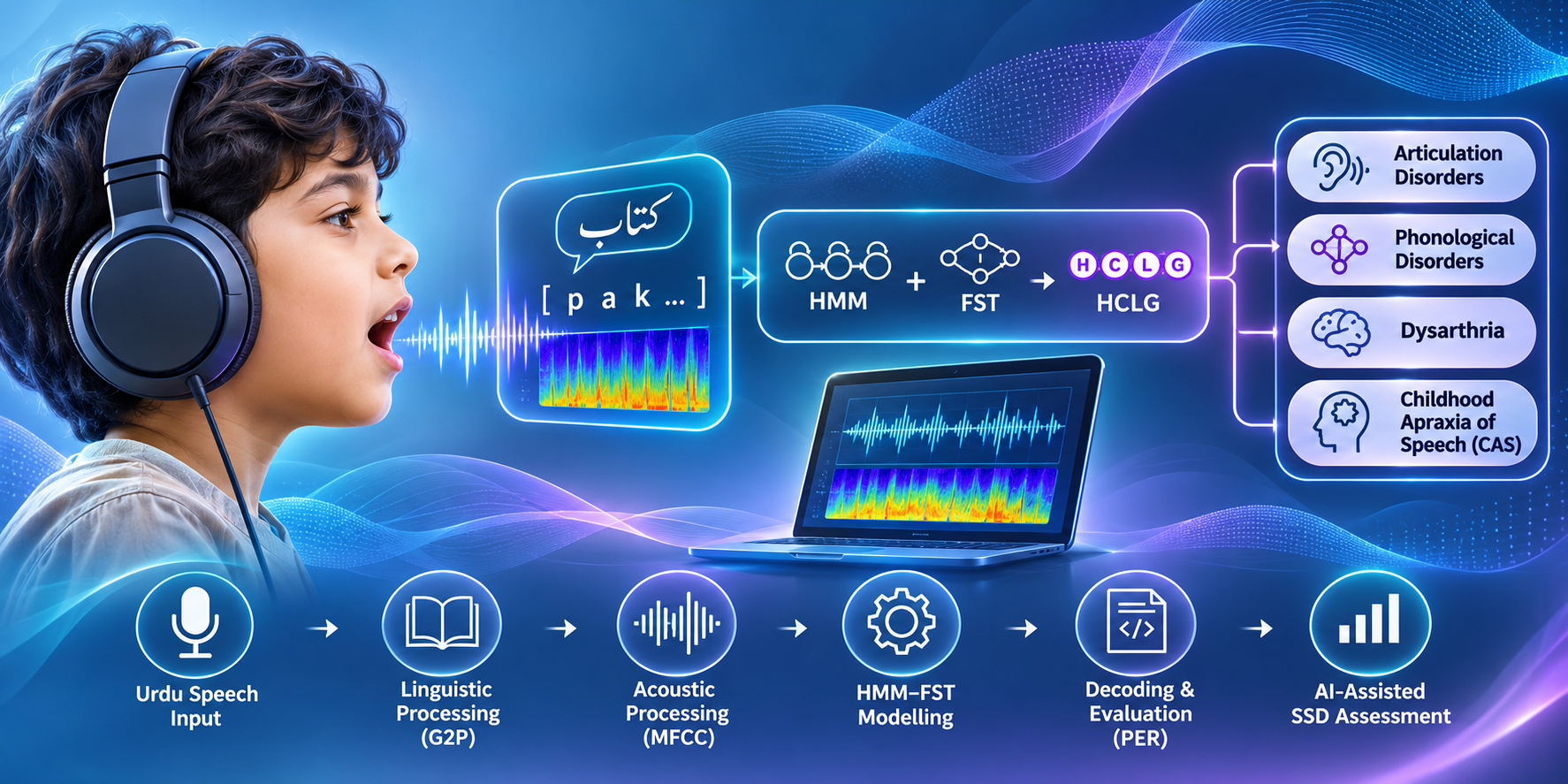
This ongoing research aims to develop an AI-driven framework for the objective assessment of speech sound disorders using computational speech analysis. The framework focuses on four major conditions: articulation disorders, phonological disorders, dysarthria, and childhood apraxia of speech (CAS).
By integrating machine learning and deep learning techniques, the research investigates automated speech analysis for detecting the presence of speech sound disorders, identifying disorder-specific characteristics, and distinguishing between different disorder types. The broader goal is to develop an intelligent assessment system that provides consistent, data-driven insights and supports speech-language pathologists in clinical decision-making.
The Urdu phoneme-level speech recognition system demonstrated improved performance with an increase in training data. The Phone Error Rate (PER) decreased from 10.09% with 10,000 training samples to 7.89% with 84,000 samples, representing a reduction of 2.20 percentage points. The results indicate that increasing the training data improves phoneme recognition performance. Remaining errors were mainly associated with acoustically similar phonemes, homophones, and prefix/suffix overlap. These findings establish a foundation for further development of automated speech analysis and AI-assisted speech sound disorder assessment.
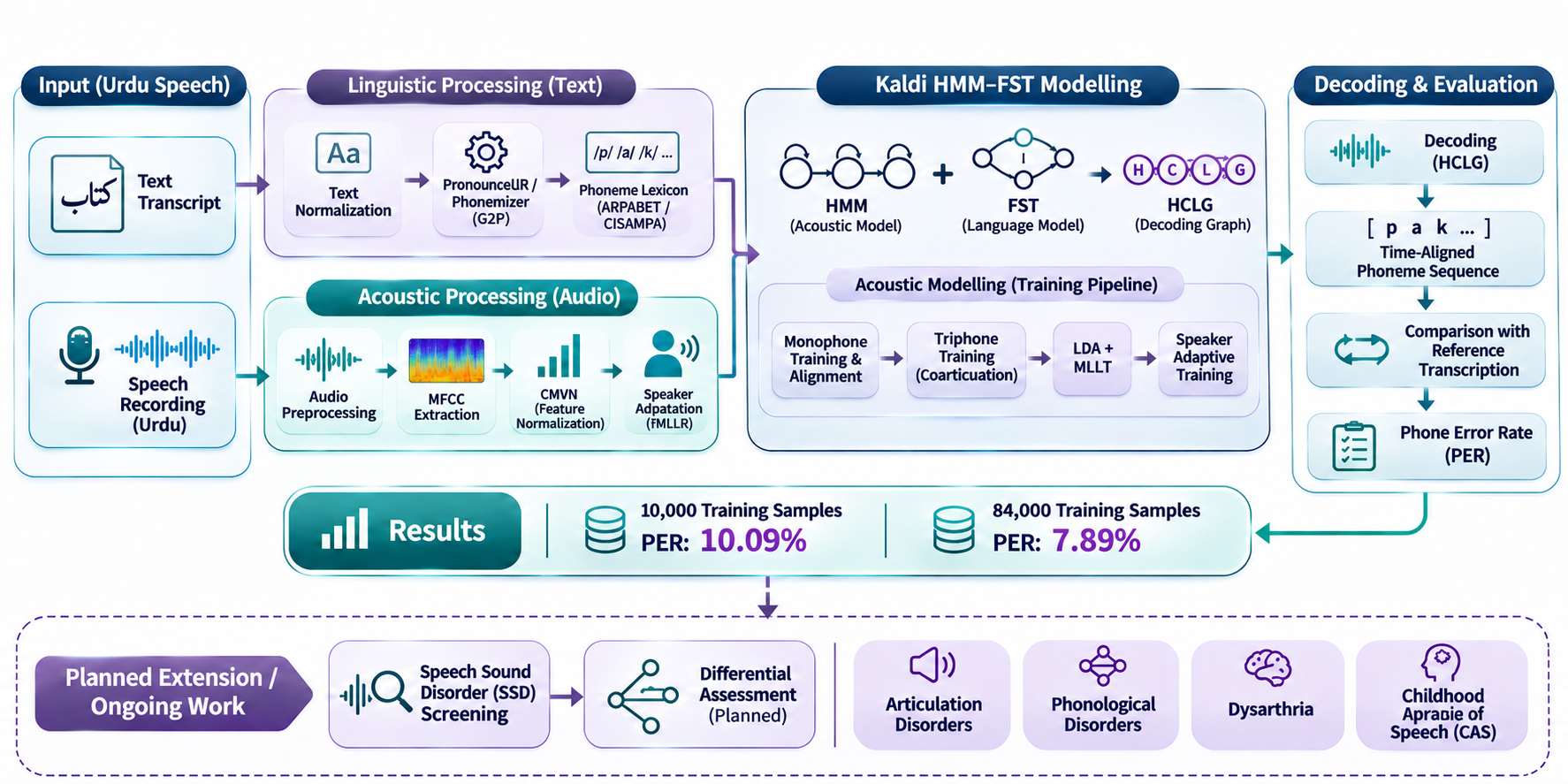
Ultimately, this work aims to contribute towards accessible, reliable, and standardized AI-assisted assessment of speech sound disorders, complementing rather than replacing expert clinical judgment.