Machine Learning Based Osteoporosis Stratification and Bone Mineral Density Estimation
- Status
- Current
- Research area
- Radiology
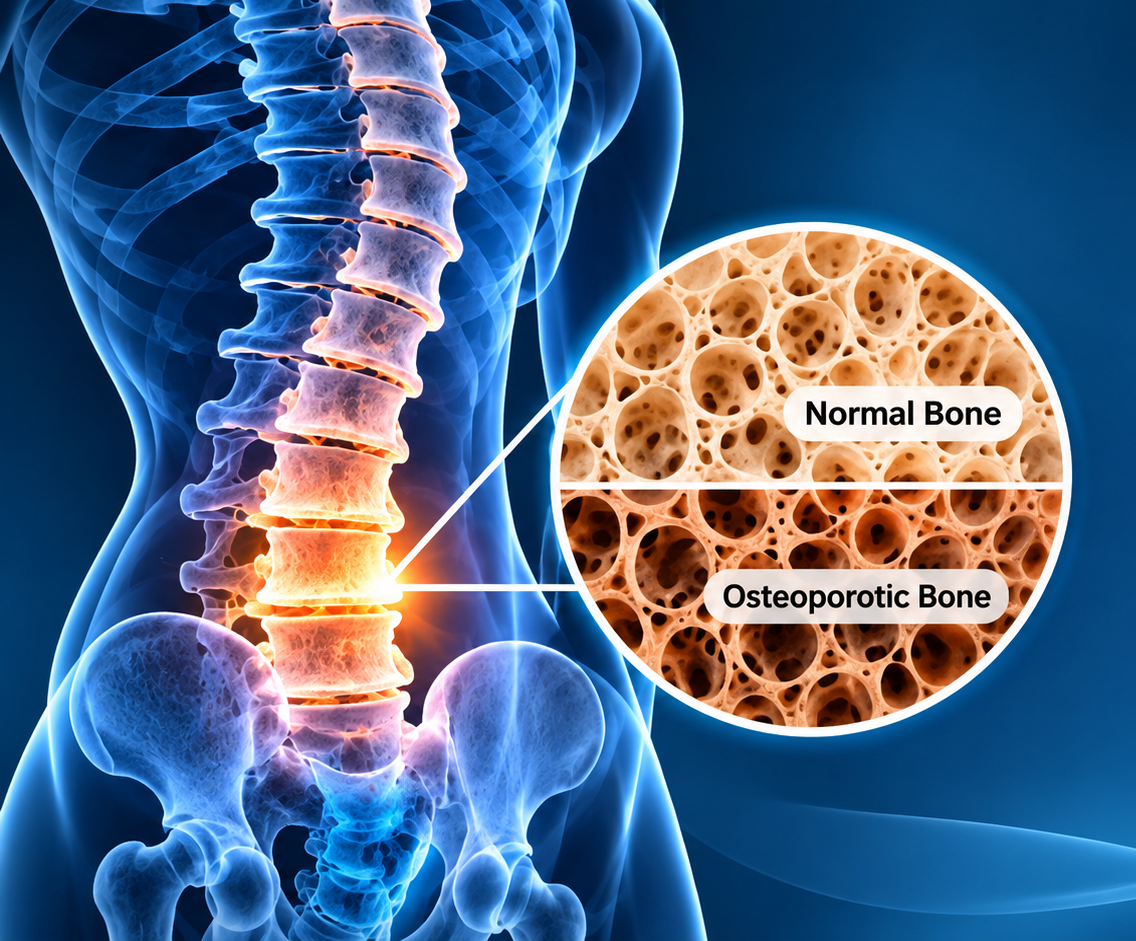
Osteoporosis is a common skeletal disorder characterized by reduced bone mineral density (BMD) and deterioration of bone microarchitecture, resulting in decreased bone strength and an increased risk of fractures. Early identification and assessment of osteoporosis are essential for timely clinical intervention, appropriate treatment planning, and prevention of fracture-related complications. Conventional diagnostic approaches, particularly Dual-Energy X-ray Absorptiometry (DXA), provide important measurements for assessing bone health and diagnosing osteoporosis. However, access to DXA facilities may be limited in resource-constrained healthcare settings due to equipment costs, infrastructure requirements, and limited availability. Furthermore, identifying relevant clinical and laboratory indicators associated with reduced BMD can help improve patient assessment and support more accessible screening strategies. These challenges motivate the development of machine learning approaches that can utilize routinely collected patient information to assist in osteoporosis risk assessment and clinical decision-making.
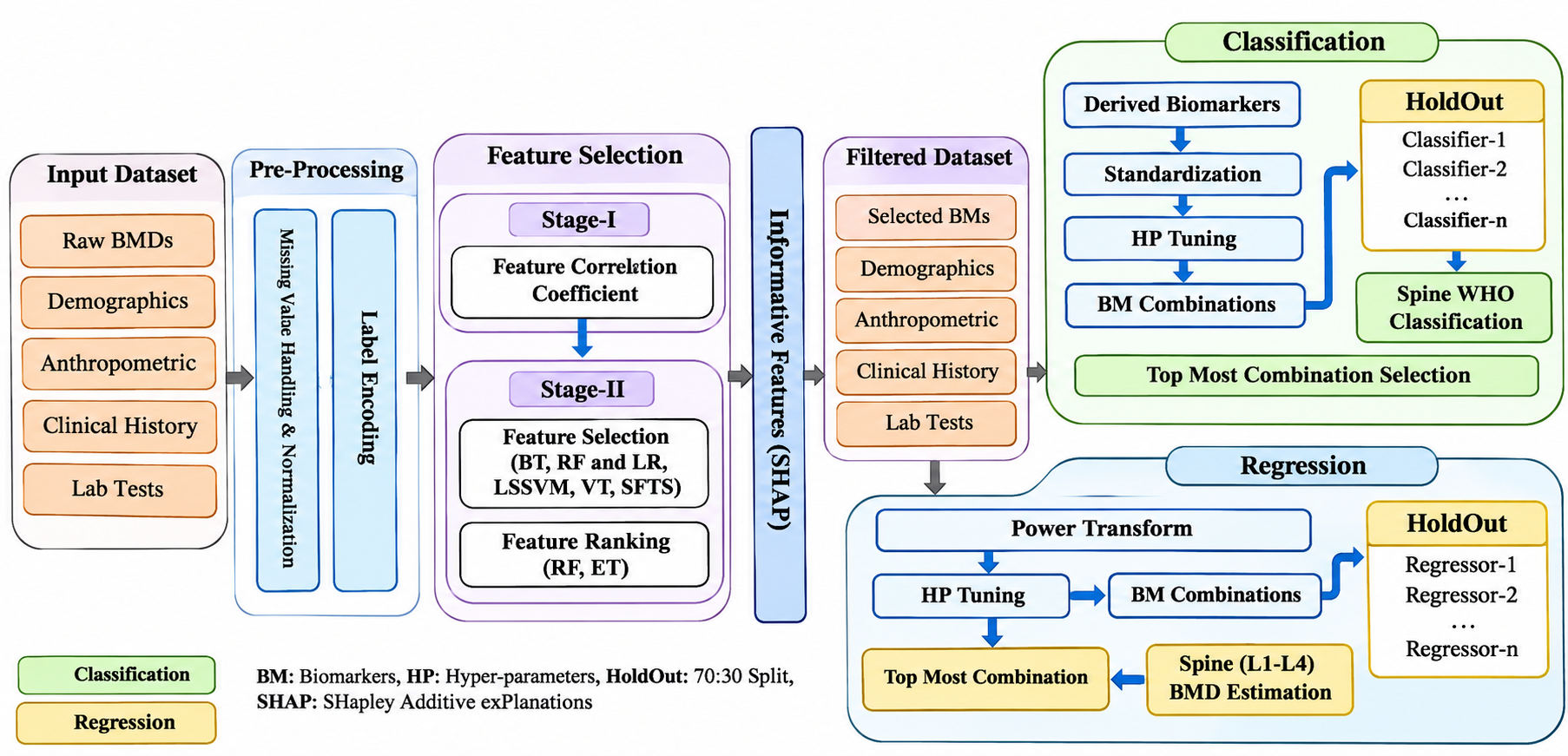
This research focuses on developing a feature-efficient, dual-task machine learning framework for osteoporosis severity classification and lumbar spine BMD estimation using demographic, anthropometric, clinical history, and laboratory parameters alongside DXA-derived BMD measurements. The proposed methodology incorporates data preprocessing, feature selection, feature ranking, and SHAP-based explainability to identify the most relevant clinical and laboratory predictors associated with bone health. The selected features are subsequently utilized for two complementary prediction tasks: classification of patients into three categories (normal, osteopenia, and osteoporosis) and regression-based estimation of lumbar spine BMD. By integrating classification and regression within a unified framework, the research aims to investigate the predictive value of routinely available patient information while reducing dependence on large feature sets. The emphasis is on developing an interpretable and computationally efficient machine learning solution that can support osteoporosis assessment and facilitate data-driven screening in healthcare environments with limited diagnostic resources.